
Hairline Design for Natural Results
Our Technique for hairline restoration based on facial proportions, gender, and long-term planning.

Artistic and Scientific Principles
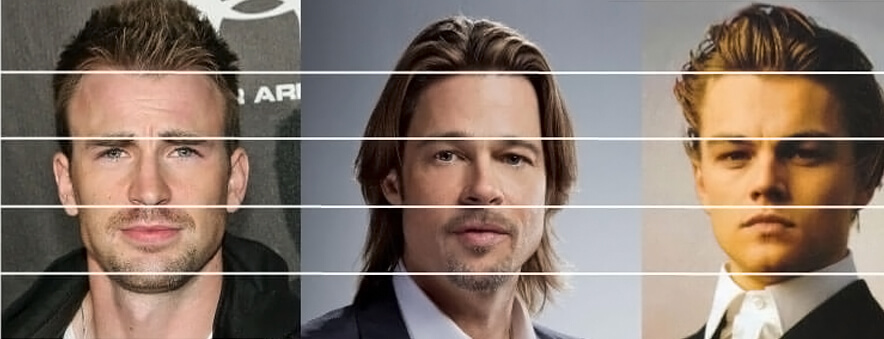
Foundational Guidelines
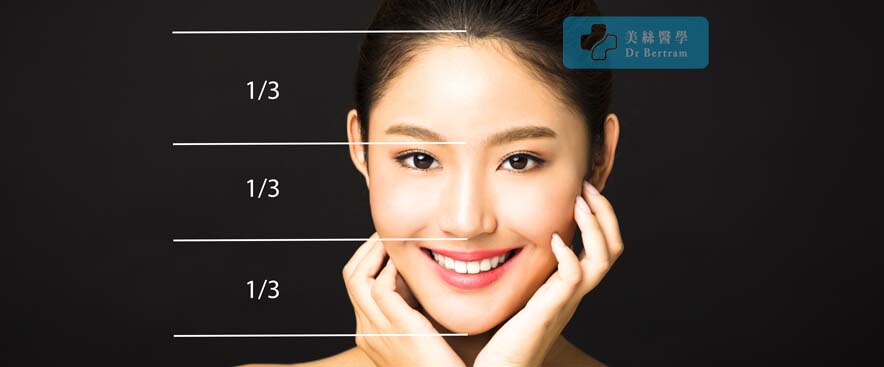
- Rule of Thirds: The face can be divided vertically into three sections: hairline to brow, brow to nose base, nose base to chin. This serves as a guideline for initial hairline height.
- Ethnic and individual adaptation: Facial proportions vary by ethnicity and individual anatomy. Design is adjusted accordingly.
- Natural irregularity: A perfectly straight hairline appears unnatural. Single-hair grafts are placed at the front to create a soft, feathered transition.
Gender Differences in Hairline Design
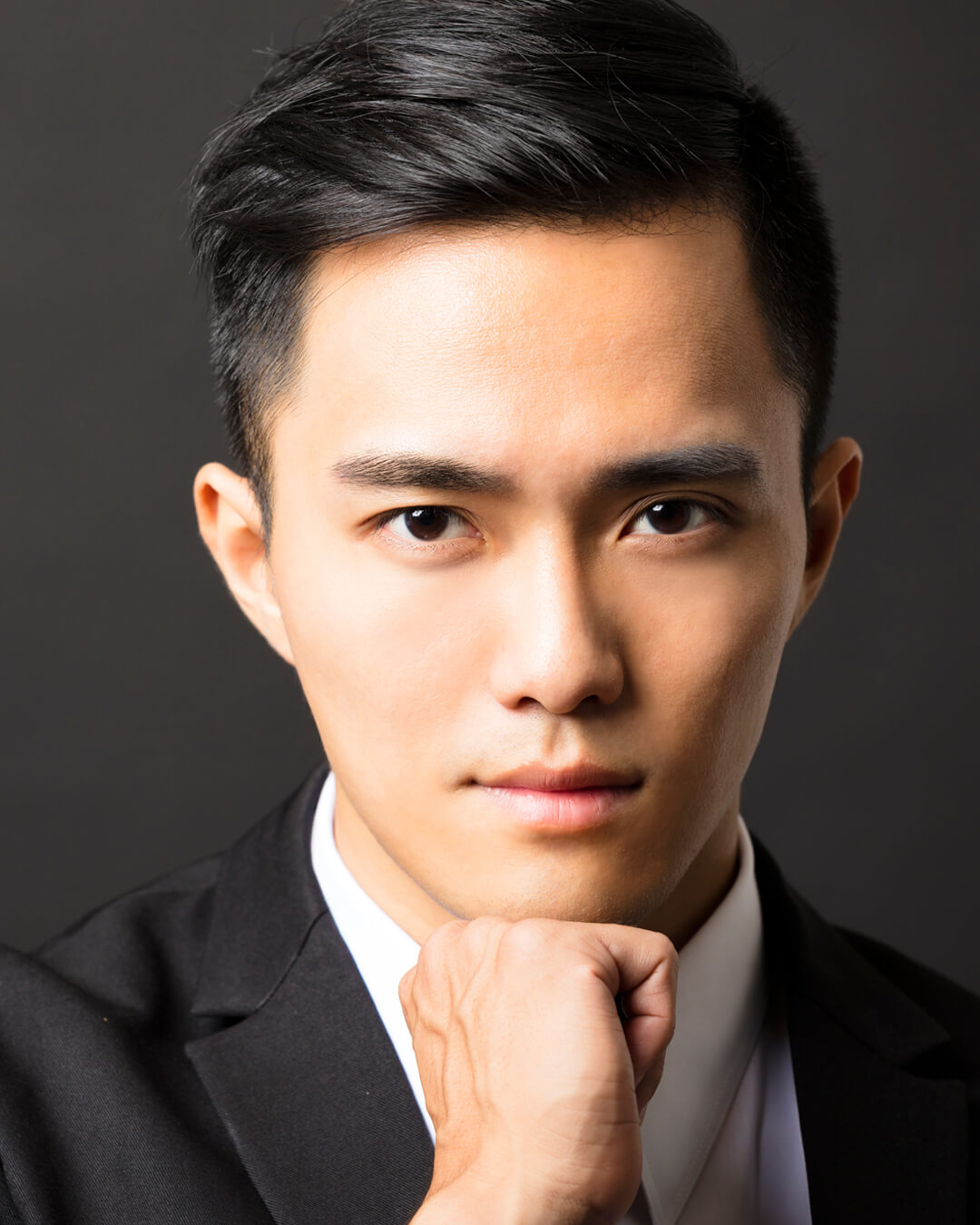
Men's Hairlines
- Typically characterized by temporal recession, forming an M-shape over time.
- Goal is to restore a masculine look.
- Temporal points are often maintained or restored.
- Conservative design accounts for future Norwood progression. Good Candidates →
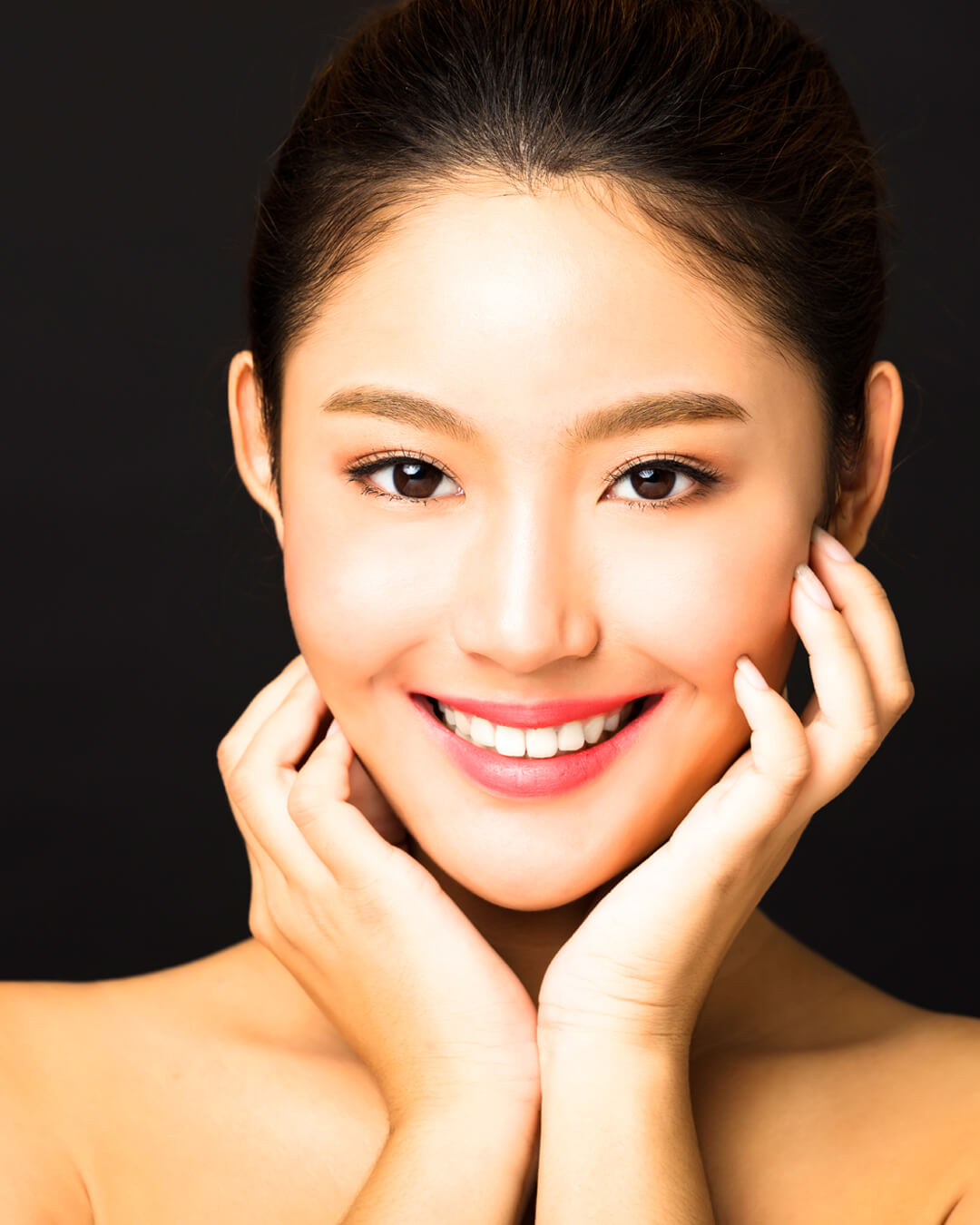
Women's Hairlines
- Generally rounded and lower, with no temporal recession.
- Goal is to restore density with a soft, flowing transition.
- Sharp temporal points should be avoided.
- Fronto-temporal corners are filled to eliminate angular shapes.
Laser-Guided Hairline Placement
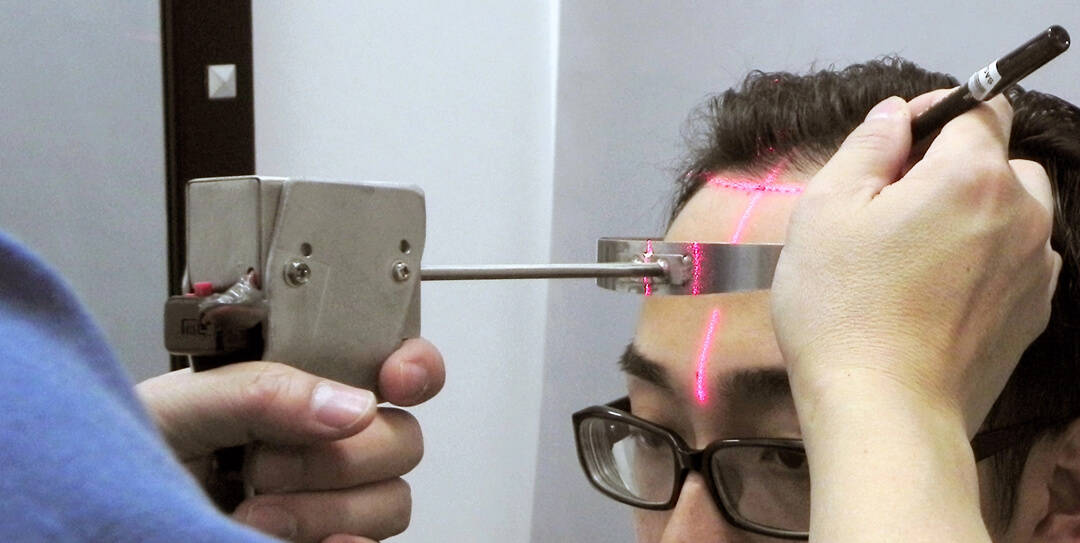
A hand-held laser projection device may be used to visualise the proposed hairline directly on the scalp before marking. This allows for:
- Real-time visualisation of the proposed design
- Collaborative adjustment with patient feedback
- Symmetry assurance with facial landmarks
- Rapid execution — design time reduced from 15–20 minutes to under 1 minute
Placement Steps
1. Establish Midline: Vertical laser beam aligned with facial landmarks to find anatomical centre.
2. Project Contour: Device projects inverted-U shape for women, horizontal line for men.
3. Patient Review: Patient views the projected line and provides feedback.
4. Finalise Design: Once approved, the design is traced with a surgical marker.
Advantages
- Improved symmetry
- Rapid execution
- Published methodology
Limitations
- Surgeon artistry still required for natural irregularities
- May need intentional deviation if facial bone structure is asymmetrical
Graft Requirements
Design Principles
- Hair per graft: Average of 1.8 hairs per graft.
- Natural hairline design: Irregular, age-appropriate, with single-hair grafts at the front.
- Technique: FUE is used for graft harvesting.
- Long-term planning: Conservative hairline position preserves donor for future options.
Men - Norwood Class

Norwood II
~1,200–1,600 grafts
Temple refinement. Caution advised for very young patients (under 25).
Norwood III
~1,800–2,400 grafts
Frontal frame and central forelock. Donor preserved for crown.
Norwood IV
~2,200–3,000 grafts
Conservative hairline design with mid-scalp coverage.
Norwood V-VI
~3,600 grafts
Key Area Transplant approach for visual improvement.
Women - High Forehead
- Typically 1,800–2,400 grafts (2,400–4,000 hairs), with focus on fronto-temporal triangles.
Setting Expectations
Realistic Outcomes
- Natural frame, softened angles, facial harmony. Ages gracefully.
- Initial growth at 3–4 months. Significant density at 6–9 months. Final results at 12–18 months.
Unrealistic Expectations
- Extremely low hairlines
- Celebrity-inspired designs ignoring facial structure, density exceeding donor capacity.
Frequently Asked Questions
Typically age 25 or older once the hair loss pattern has stabilised. Younger patients may be advised to delay.
Transplanted hair is DHT-resistant and continues growing. Native hair may continue to thin over time.
Initial growth at 3–4 months. Significant density at 6–9 months. Final results at 12–18 months.
Medication may be recommended to help protect native hair from further recession, but it is not mandatory.
Generally not recommended. Active scarring conditions should be stabilised with medical management before considering hair transplant.
Typically, one session of 1,800–2,400 grafts is sufficient for women. Minor touch-ups may be considered.
Selected References
- Rose P. Hairline Design. Hair Forum. Sept/Oct 2002;12(5).
- Shiao TK, Shiao IS. Laser-Guided Hairline Design. Hair Forum. March/April 2007;17(2):53-54.
- Ng B, Pathomvanich D. Laser-assisted hairline placement. Hair Transplant Forum Int. 2008;18(5):169-173.
- Pathomvanich D, Imagawa T. Hair Restoration for Asians. Springer, 2009.