
Unnatural Hair Transplant Results: Etiology & Prevention
An objective examination of the technical and artistic errors leading to detectable hair restoration results, emphasizing the irreversibility of donor mismanagement and the critical role of conservative, long-term surgical planning.
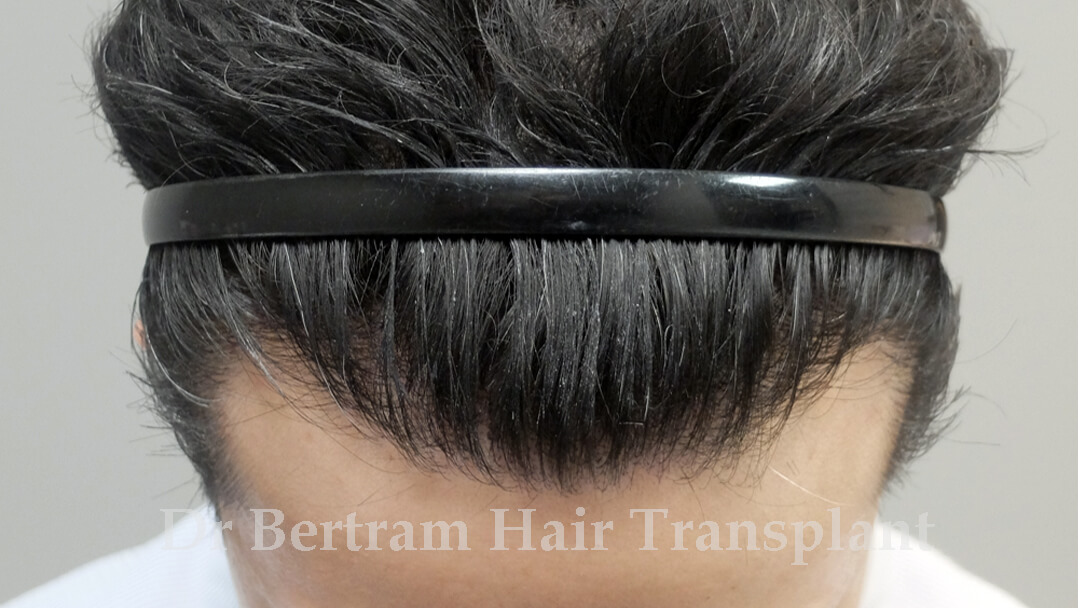
Surgical Error & Aesthetic Failure Matrix
Detectable artificiality in hair restoration arises from specific deviations in design, placement, and planning. Understanding these failure modes is essential for risk mitigation.
The "Corn Row" Effect
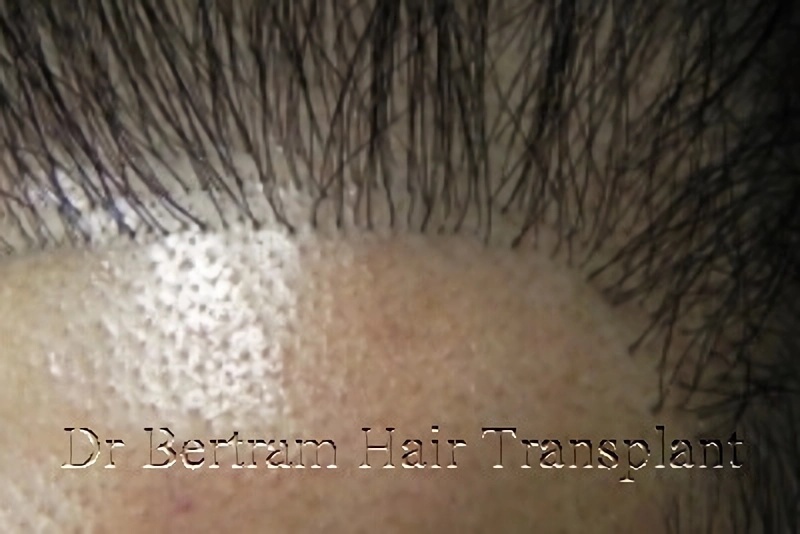
- Cause: Placement of multi-hair follicular units in perfectly straight, parallel lines.
- Mechanism: Lack of macroscopic irregularity and random distribution mimics agricultural planting rather than biological growth.
- Outcome: Highly detectable patterned appearance, especially under bright light or when hair is worn short.
Angulation & Direction Errors
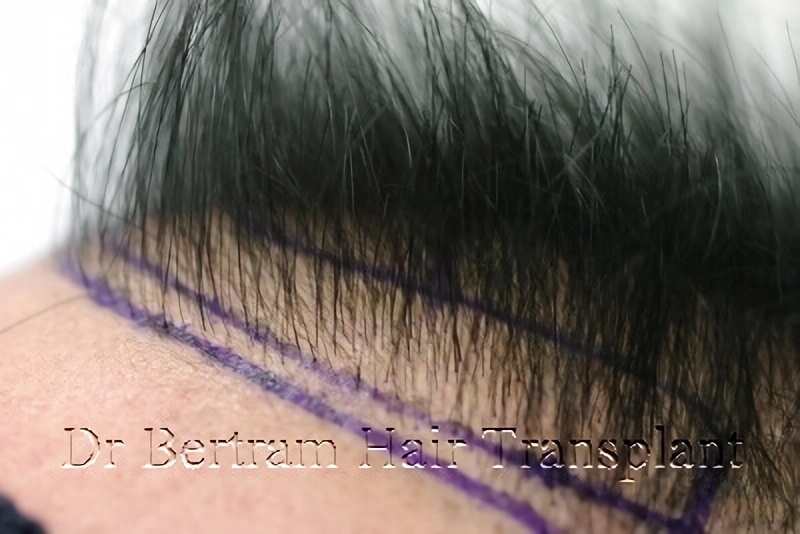
- Cause: Grafts inserted perpendicular (90°) to the scalp instead of the natural acute angle (35–45°).
- Mechanism: Hair shafts emerge straight up ("bristle effect") rather than lying flat, creating unnatural texture and density.
- Outcome: Hair is impossible to style naturally; often requires destructive punch-out excision which leaves permanent scarring.
The "Pluggy" or "Doll's Hair" Look
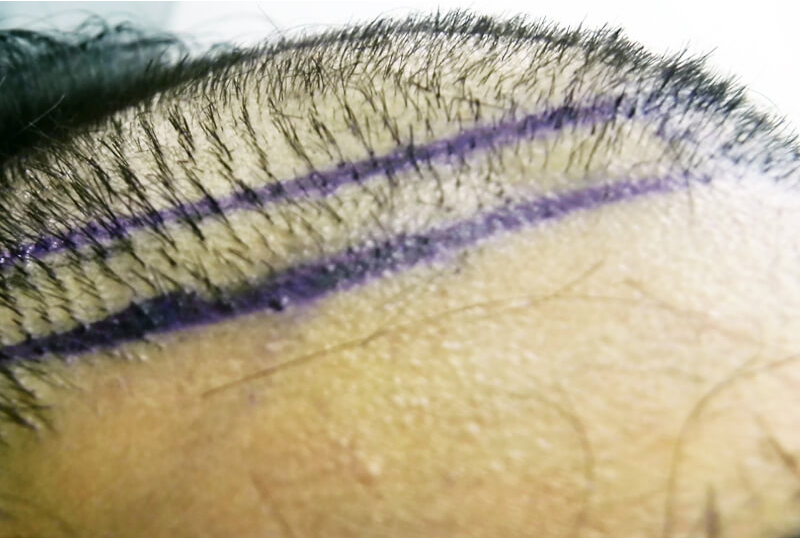
- Cause: Use of large mini-grafts (>4 hairs) at the hairline or lack of a single-hair feathered transition zone.
- Mechanism: Abrupt, sharp border between skin and hair with no gradual density gradient.
- Outcome: Artificial, "helmet-like" appearance that immediately signals surgical intervention.
The "Kappa" Hairline
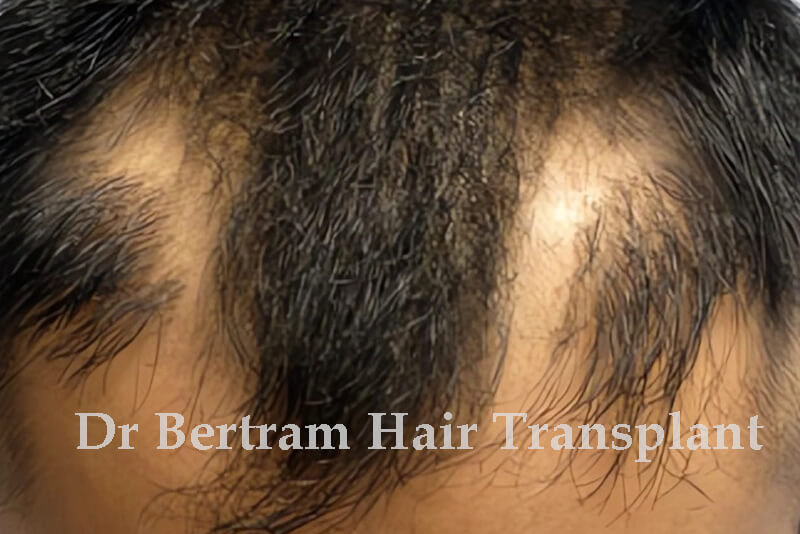
- Cause: Implantation of a low, dense, juvenile hairline in a young patient with aggressive future hair loss patterns.
- Mechanism: Donor supply is exhausted on the frontal rim; subsequent native hair loss behind the transplant creates an isolated "island" of hair.
- Outcome: Irreversible aesthetic disaster. Insufficient donor reserves remain to fill the expanding bald zone behind the rim.
The "Kappa" Hairline: A Surgical Catastrophe

The term "Kappa" refers to a specific, devastating outcome where a patient is left with an isolated wall of transplanted frontal hair, while the area immediately behind it becomes completely bald. This creates a distinct separation resembling the Greek letter or an island, hence the name.
Etiology and Mechanism
This condition arises from a fundamental failure in lifetime planning. It typically occurs when a surgeon accedes to a young patient's request for a low, dense, juvenile hairline without accounting for the inevitable progression of Androgenetic Alopecia. The finite donor supply is aggressively harvested to create this frontal wall. As the patient ages, native hair behind the transplant recedes due to genetic factors. Because the donor area has been exhausted, there are no remaining grafts to fill the expanding bald zone, leaving the frontal rim permanently isolated.
Irreversibility
The Kappa effect is largely irreversible. Repair is constrained by the absolute lack of donor reserves. Unlike other complications that can be camouflaged, this represents a total strategic failure of resource allocation. Prevention relies entirely on conservative, age-appropriate hairline design that anticipates future Norwood progression and reserves sufficient grafts for mid-scalp and crown coverage.
Principles of Prevention: Avoiding Aesthetic Failure
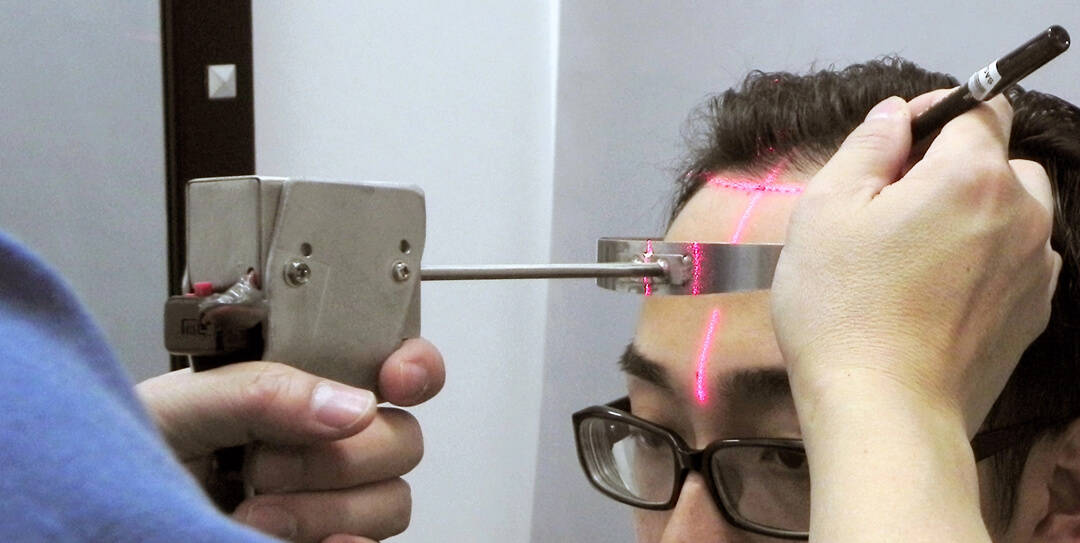
Given the severe limitations of repair surgery, prevention through rigorous pre-operative planning is the only reliable strategy. Ethical hair restoration rests on three pillars:
1. Artistic Judgment & Macroscopic Irregularity
A natural hairline is never perfectly symmetrical or straight. It requires intentional asymmetry, micro-irregularities, and a feathered transition zone composed primarily of single-hair follicular units. The design must harmonize with the patient's facial geometry, age, and ethnic characteristics. For instance, Asian hairlines often require specific considerations regarding hair shaft caliber and growth direction to avoid a "helmet" look.
2. Lifetime Donor Management
Surgical planning must extend decades into the future. The surgeon must calculate the lifetime donor supply against the projected extent of genetic hair loss (Norwood scale). This often necessitates ethical restraint: declining requests for overly low or dense hairlines in young patients to preserve grafts for future recession. The goal is a sustainable result that ages gracefully, not a temporary maximum density that leads to future isolation.
3. Technical Precision in Placement
Execution must mimic biology. This involves:
- Randomized Distribution: Avoiding linear patterns by varying the depth and spacing of recipient sites.
- Correct Angulation: Matching the natural exit angle (35–45°) and radial flow of surrounding native hair.
- Graft Selection: Using fine, single-hair grafts for the leading edge and multi-hair units only for behind the transition zone to build density without compromising naturalness.
The Hard Limits of Repair Surgery
Correcting an unnatural transplant is a complex salvage operation, not a fresh start. Patients must understand that repair is constrained by biological and physical limits, often yielding only partial improvement rather than perfection.
💡 Permanent Donor Depletion
Every graft wasted in a failed primary procedure is lost forever. Since the donor supply is finite, repair surgeries often suffer from insufficient graft availability, limiting the ability to add density or lower a hairline further.
💡 Scarring & Fibrosis
Removing misplaced grafts (via punch excision) leaves permanent micro-scars. Re-operating on scarred tissue reduces blood supply, potentially lowering the graft survival of new grafts and complicating the healing process.
💡 Uncorrectable Angulation
If grafts are planted at a perpendicular angle, they cannot simply be "re-angled." The only solution is extraction, which destroys the follicle. In many cases, widespread angulation errors are deemed unrepairable, leaving the patient with a permanent textural defect.
💡 Camouflage vs. Correction
Most repair strategies aim for camouflage (adding irregular grafts to break up lines) rather than true correction. The goal shifts from "perfect naturalness" to "less detectable," and final density is often suboptimal compared to a well-executed primary procedure.
Clinical Summary
- Irreversibility of Donor Mismanagement: The "Kappa" hairline represents a catastrophic failure of lifetime planning, resulting in an isolated frontal rim that cannot be connected due to donor exhaustion.
- Technical Artifacts are Preventable: "Corn rows," "pluggy" looks, and angular errors are direct results of poor technique, linear placement, and lack of artistic irregularity.
- Repair is Salvage, Not Restoration: Secondary surgery is severely limited by scarring, fibrosis, and permanent donor depletion, often achieving only camouflage rather than full correction.
- Angulation Errors are Critical: Incorrect graft angles (90°) are often uncorrectable without destructive excision, making precise primary placement non-negotiable.
- Ethical Restraint is Essential: Surgeons must prioritize long-term sustainability over short-term patient demands, designing conservative hairlines that accommodate future genetic loss.
- Artistry Defines Naturalness: A undetectable result requires intentional asymmetry, a feathered transition zone, and randomized graft distribution that mimics biological growth patterns.