Clinical Gallery: Male Hair Restoration
Documented outcomes for male pattern hair loss by Norwood classification.
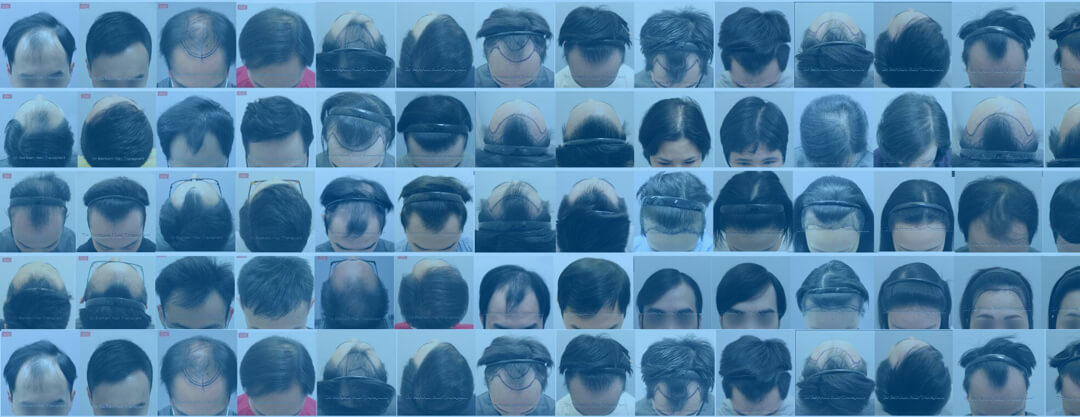
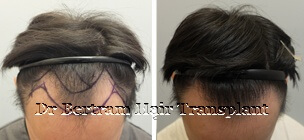
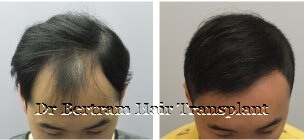
Class II - III: Early Frontal Recession
Clinical presentation: Temporal recession forming an "M" shape. Treatment goal: restore temporal points to frame the face.
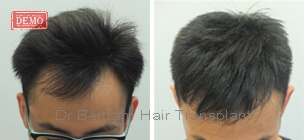
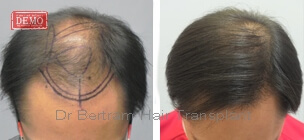
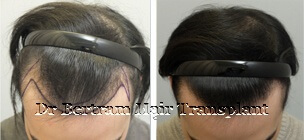
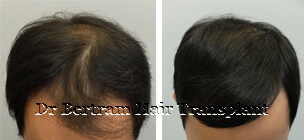
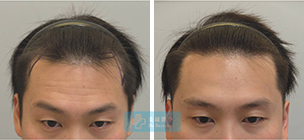
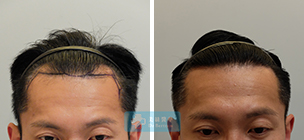
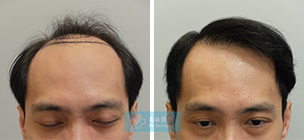
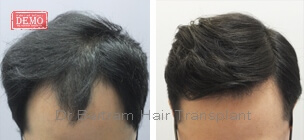
Class IIIa: Deepening Temporal Recession
Clinical presentation: Recession along temporal line forming pronounced "M" or "U" shape. Frontal bridge remains intact. Treatment focus: rebuilding temporal peaks.
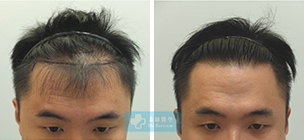

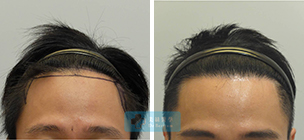
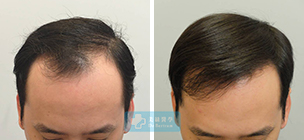
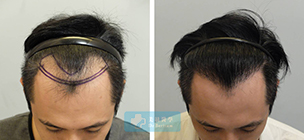
Class IV: Separation of Frontal and Crown Zones
Clinical presentation: Band of hair between frontal recession and crown thinning or broken. Treatment requires planning for frontal zone restoration with consideration of future crown stability.
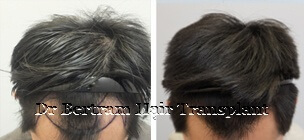
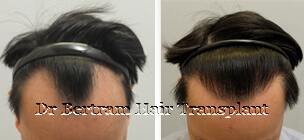
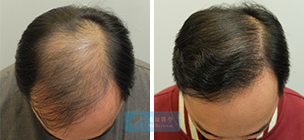
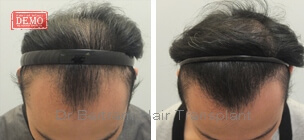
Class IVa: Frontal Recession with Mid-Scalp Thinning
Clinical presentation: Significant frontal hairline recession with thinning extending into mid-scalp. Crown bald spot may not be fully formed. Treatment typically requires higher graft counts for density across a larger area.
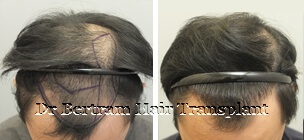


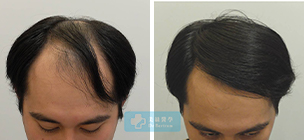
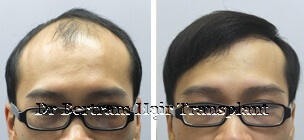
Class V: Frontal-Crown Bridge Loss
Clinical presentation: Band of hair between frontal and crown zones is sparse or absent, creating a large U-shaped area of loss. Treatment requires strategic graft distribution for facial framing and mid-scalp coverage.
Class Va: Extensive Loss with Peripheral Fringe
Clinical presentation: Extensive loss extending around the sides, leaving only a fringe of hair on the sides and back. Treatment requires maximum donor management. Treatment focus: facial framing with realistic expectations for a natural, mature appearance.