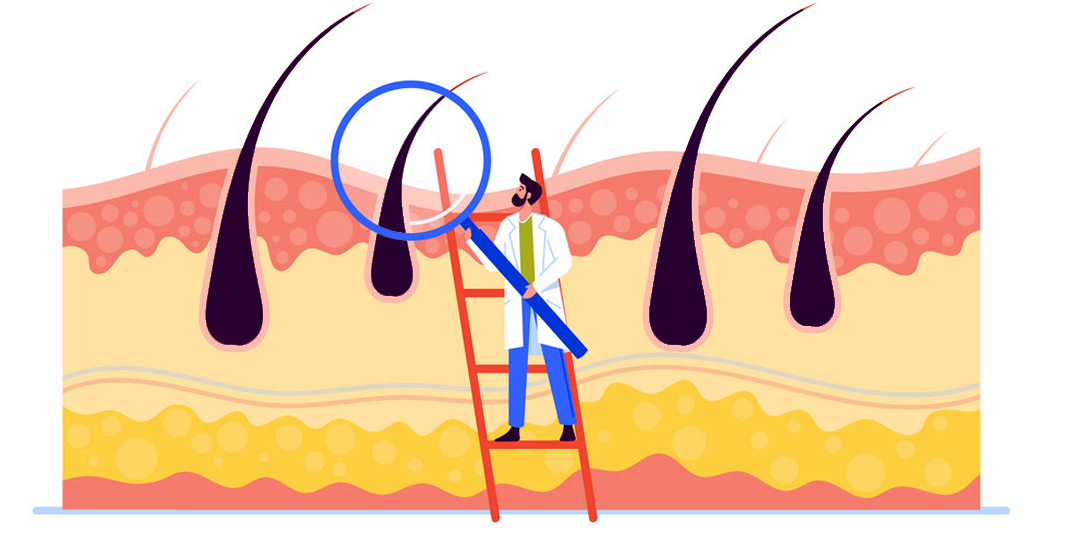
Diagnosing Hair Loss: From Microscopy to Biopsy
Clinical methods for diagnosing hair loss using imaging and laboratory analysis.
AI Summary: Hair Loss Diagnosis
Q: What diagnostic methods are used for hair loss evaluation?
Diagnosis follows a stepwise approach: (1) Trichoscopy (scalp dermoscopy) examines hair shafts and follicles at 10x–70x magnification. (2) Scalp biopsy with horizontal sectioning is used for suspected scarring alopecias. (3) Laboratory blood tests screen for nutritional, hormonal, or autoimmune factors. (4) Global Photography.
Diagnostic Workflow for Hair Loss Evaluation
For individuals considering hair restoration, a diagnostic protocol may be used to assess suitability.
1. History and Clinical Exam
Assessment of hair loss pattern, progression, and family history. Pull test and Norwood/Ludwig classification.
2. Trichoscopic Mapping
Evaluation of donor and recipient areas for miniaturization, inflammation, and scarring.
3. Donor Area Quantification
Measurement of density and caliber via phototrichogram.
4. Biopsy and Lab Tests
If scarring alopecia is suspected or laboratory findings are abnormal, further evaluation is indicated.
Principles of Trichoscopy
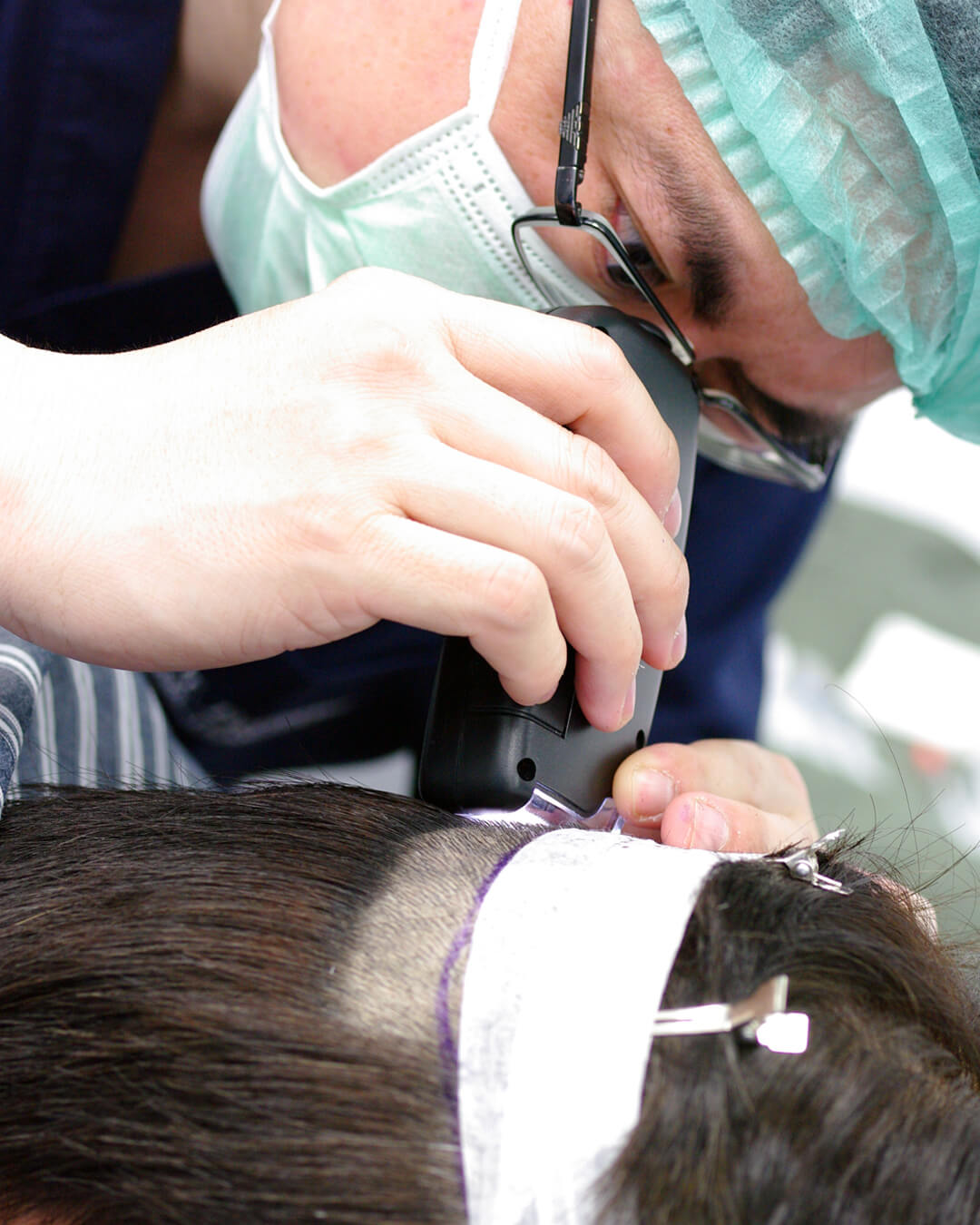
Trichoscopy, also known as dermoscopy of the hair and scalp, is a non-invasive diagnostic method using polarized or non-polarized light magnification. It visualizes hair shafts, follicular openings, and vascular patterns.
Clinical Utility
- Differential diagnosis: Distinguishing between scarring and non-scarring alopecias.
- Activity assessment: Identifying signs of inflammation that may affect treatment planning.
- Treatment monitoring: Documenting changes in hair density and shaft diameter.
- Biopsy guidance: Selecting optimal sites for tissue sampling.
This non-invasive visualization is a standard component of hair loss evaluation.
Scarring vs. Non-Scarring Alopecia
This distinction helps determine treatment pathways.
Non-Scarring Alopecia
- Follicular openings are visible and intact.
- Hairs thin but follicles remain.
- Examples: Androgenetic alopecia, alopecia areata, telogen effluvium.
Scarring Alopecia
- Fibrosed or destroyed follicular openings.
- Permanent absence of follicular pores.
- Examples: Lichen planopilaris, frontal fibrosing alopecia.
Trichoscopic Patterns by Condition
Androgenetic Alopecia
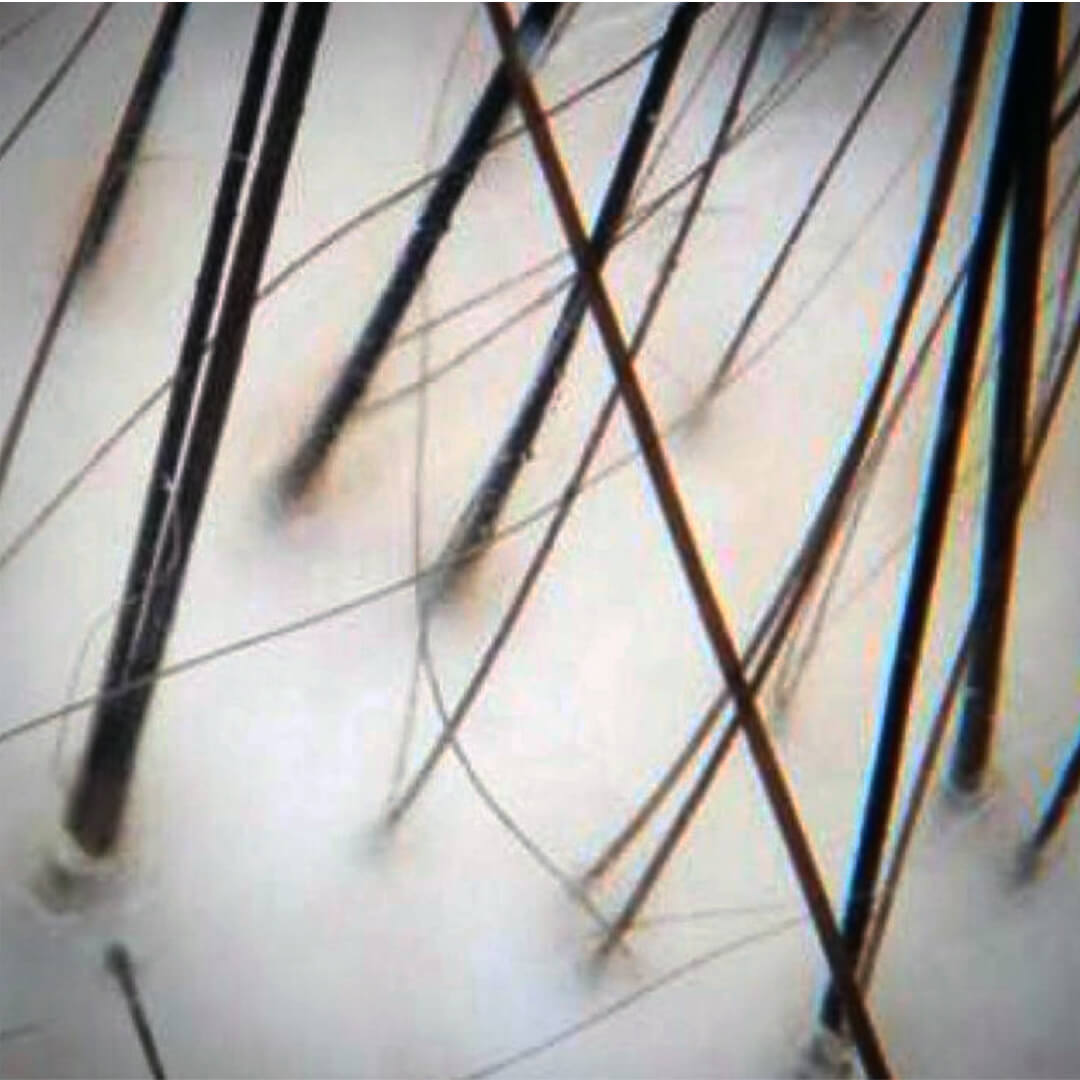
- Hair diameter diversity greater than 20%
- Peripilar signs
- Yellow dots
- Vellus hairs
Alopecia Areata
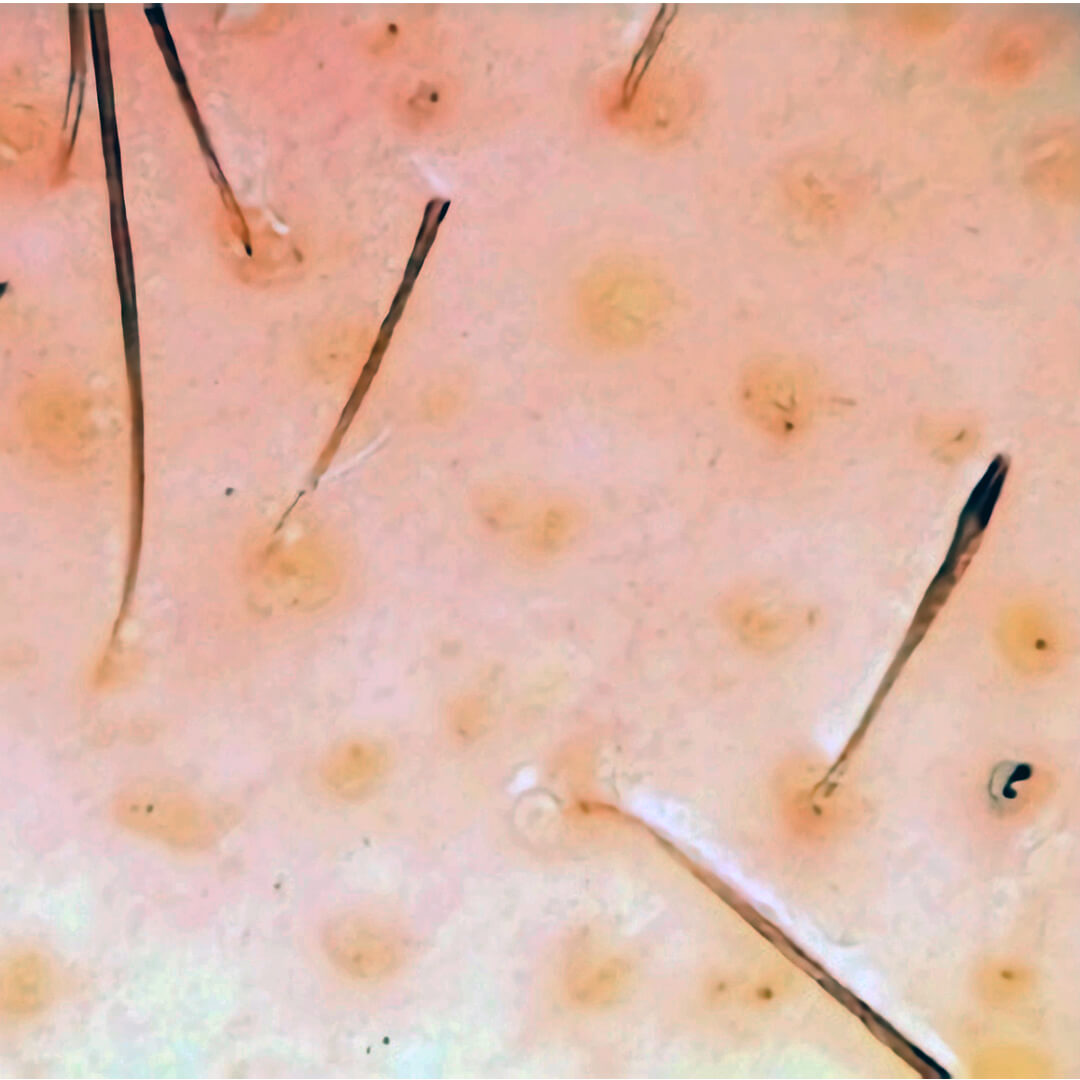
- Yellow dots
- Exclamation mark hairs
- Black dots (broken hairs)
- Cadaverized hairs
Scarring Alopecias (LPP, FFA)
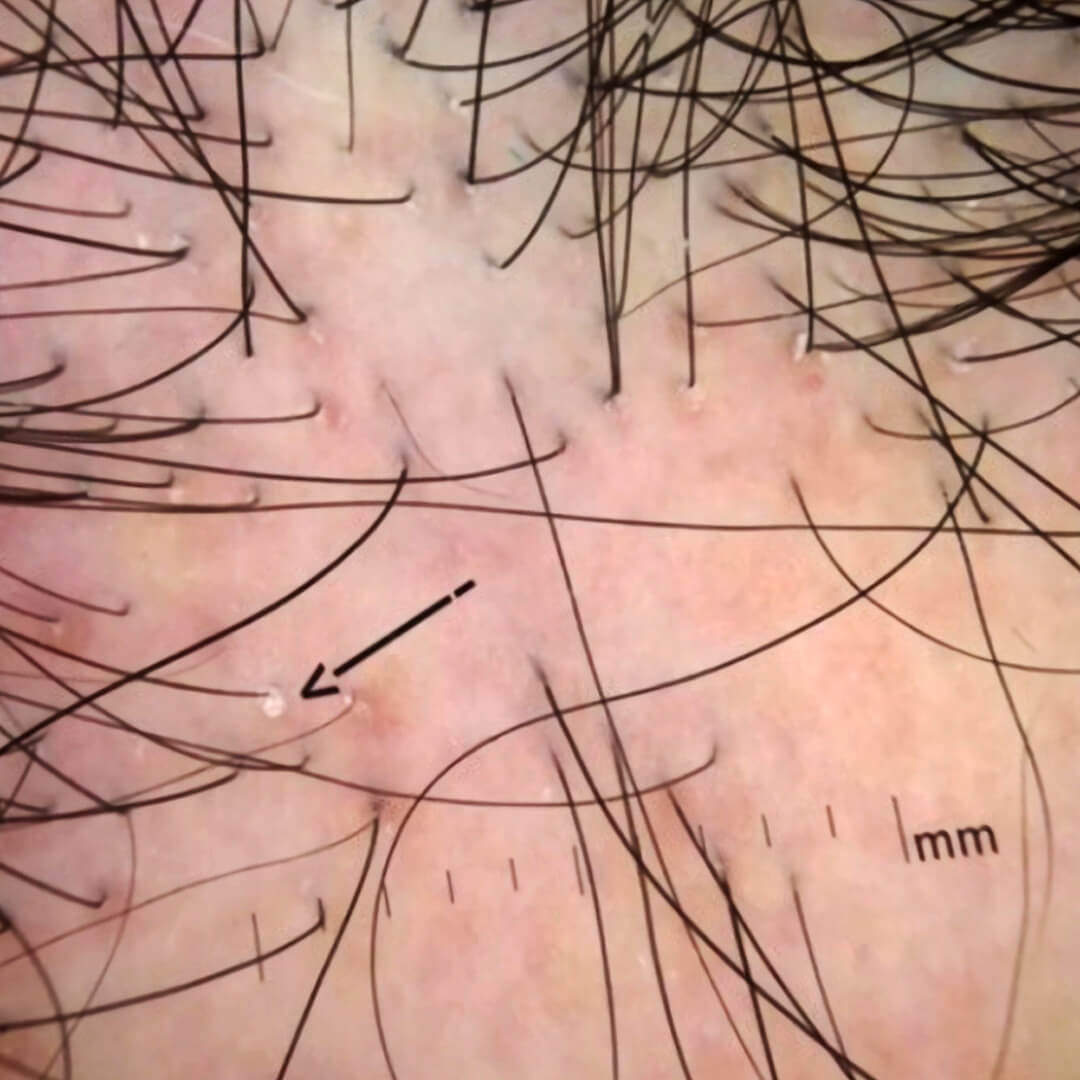
- White dots (fibrosed follicular openings)
- Perifollicular scaling
- Erythema
- Loss of follicular openings
Trichotillomania
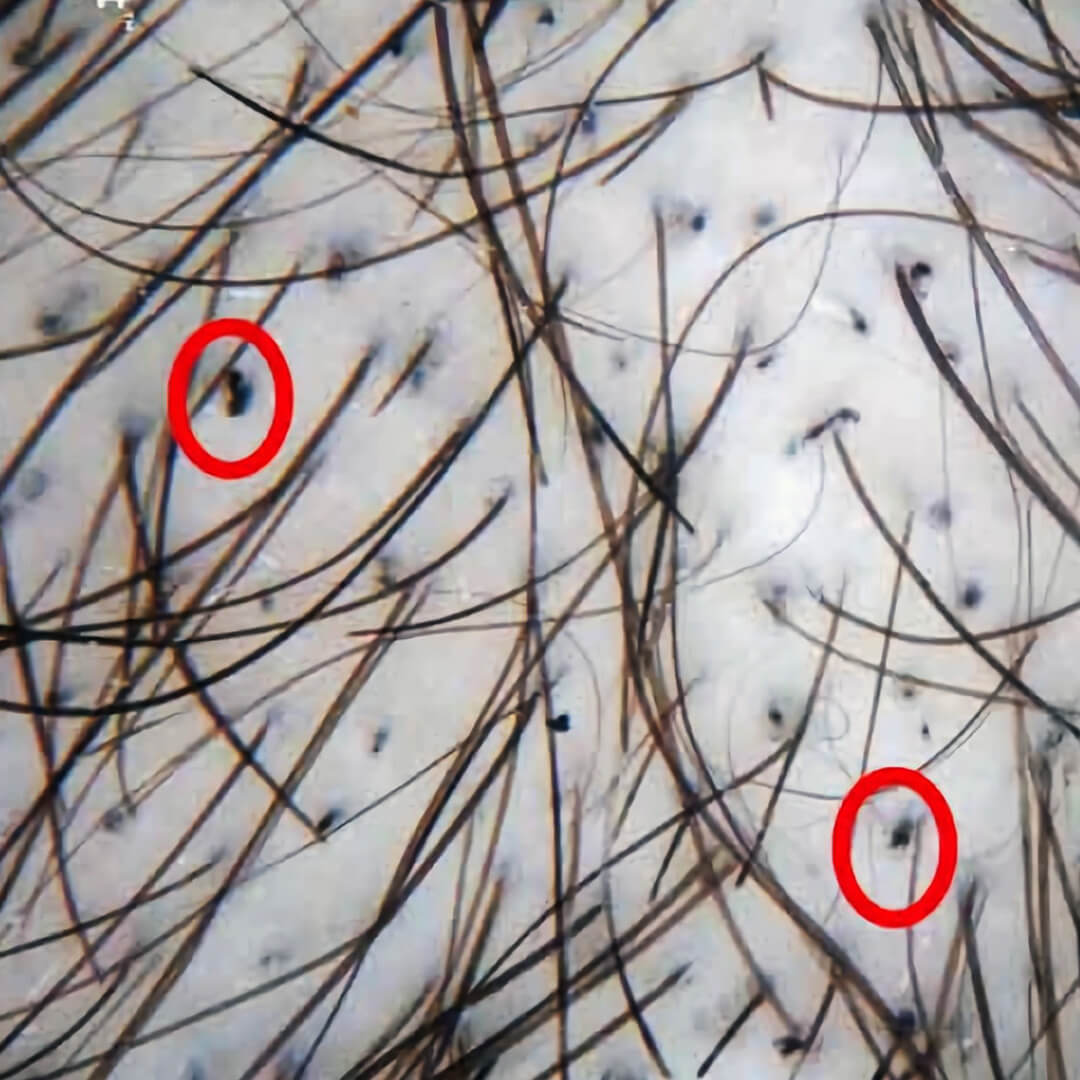
- Broken hairs of varying lengths
- Flame hairs
- Coiled or tulip hairs
- V-sign (split ends)
Scalp Biopsy
If trichoscopy suggests scarring alopecia or the presentation is atypical, biopsy may be performed.
Biopsy Techniques
- Shave biopsy: Removes superficial layers. No sutures required.
- Punch biopsy (4mm): Standard for hair disorders. Removes full-thickness sample. May require one suture.
- Excision biopsy: Complete removal of a lesion for diagnosis.
Horizontal Sectioning
For hair loss evaluation, samples are sectioned horizontally (parallel to the skin surface). This allows examination of multiple follicles at various depths, revealing:
- Follicular density and miniaturization
- Inflammatory infiltrates around follicles
- Fibrosis (scarring) replacing normal tissue
Laboratory Tests
Blood tests may identify reversible causes of hair loss:
- Hematology: Complete blood count (anemia screening)
- Iron studies: Ferritin, serum iron, TIBC
- Endocrine: TSH, free T4, testosterone, DHEAS, prolactin
- Nutritional: Vitamin D, zinc
- Autoimmune: ANA, ESR, CRP
Key Clinical Points
- Trichoscopy is a first-line, non-invasive diagnostic tool for hair loss evaluation.
- Androgenetic alopecia shows hair diameter diversity greater than 20% and increased vellus hairs.
- Alopecia areata presents with yellow dots and exclamation mark hairs.
- Scarring alopecias show white dots, loss of follicular openings, and perifollicular scaling.
- Scalp biopsy with horizontal sectioning is the standard for diagnosing scarring alopecias.
- Laboratory tests may identify nutritional, hormonal, or autoimmune factors.