
Hair Growth Cycle
Clinical overview of 5 hair growing phases and their relevance to hair restoration.
Clinical Relevance
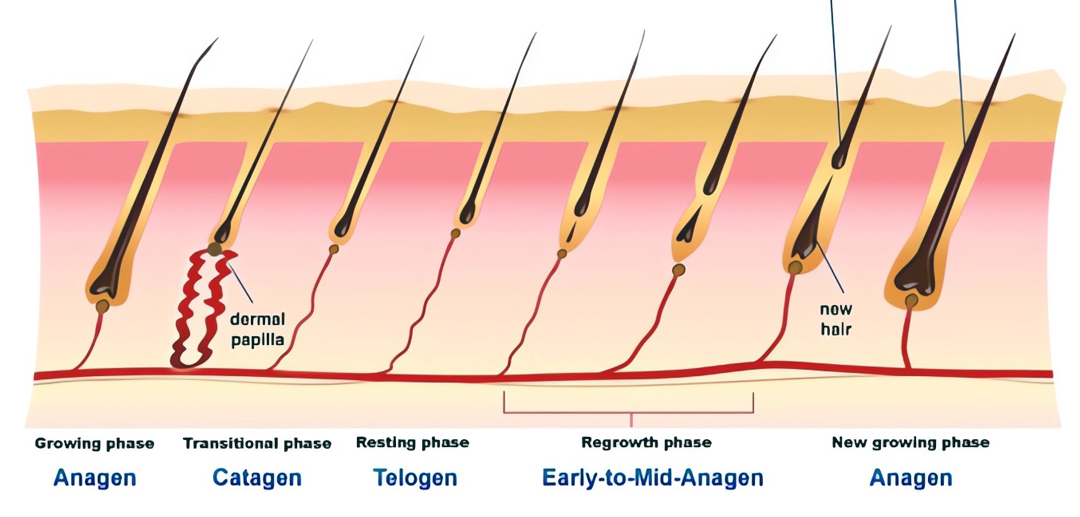
Hair growth cycle phases
- Phase dependency: Five distinct phases determine when therapies can be applied.
- Treatment timing: Certain phases may be less responsive to intervention.
- Diagnostic foundation: Understanding cycle phases supports clinical planning.
The 5 Phases of the Hair Growth Cycle
The scalp hair cycle repeats approximately 20 times in a lifetime. Human follicles operate independently, progressing through these phases asynchronously:
1. Anagen (Growing)
Duration: 2–7 years
Active growth period. 85–90% of scalp hairs are in this phase.
2. Catagen (Transitional)
Duration: 2–3 weeks
Regression period. Growth stops and the follicle detaches from blood supply.
3. Telogen (Resting)
Duration: 3–4 months
Dormancy period. 10–15% of scalp hairs are in this phase.
4. Exogen (Shedding)
Duration: Variable
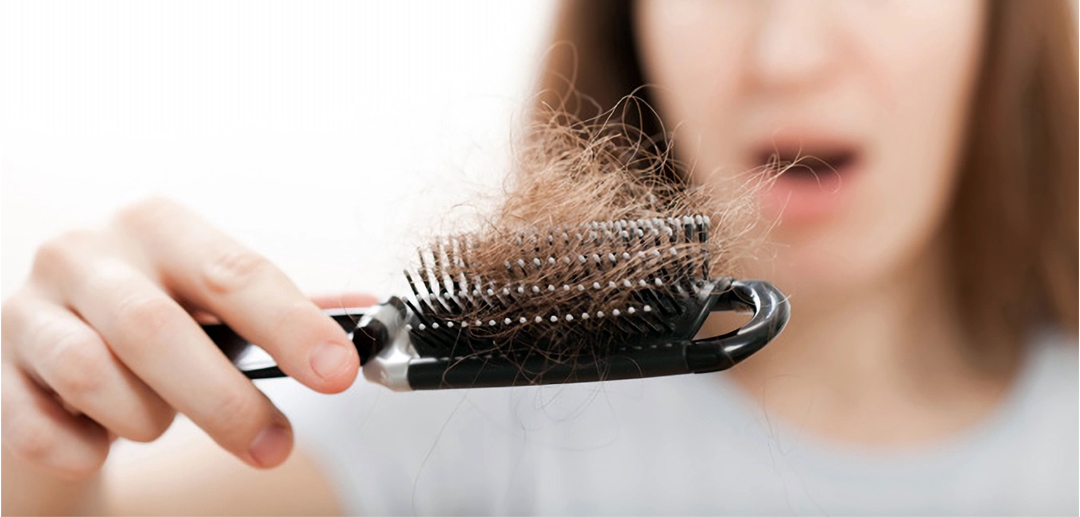
Active shedding process. Losing 50–100 hairs per day is within normal range.
5. Kenogen (Empty Phase)
Duration: Variable (lag phase)
Follicle remains empty after shedding before new anagen hair emerges.
Key Biological Insights
- Duration differences: Scalp anagen lasts 2–7 years; eyebrow anagen lasts 4–6 weeks — explaining the difference in maximum length.
- Asynchronous cycling: Each follicle operates on its own timer, preventing mass shedding.
- Stress response: Stress may push growing hairs into resting phase. Shedding typically occurs 2–3 months after the trigger.
- Seasonal influences: Growth and shedding rates may vary with seasons and hormonal shifts.
FAQ
Q: How much hair shedding is normal per day?
50–100 hairs per day is within normal range.
Q: What is telogen effluvium?
A condition where stress pushes growing hairs into resting phase. Shedding occurs 2–3 months after the triggering event.
Q: Why do eyebrows not grow as long as scalp hair?
Eyebrow anagen phase lasts 4–6 weeks, while scalp anagen lasts 2–7 years.
Q: Can hair cycle phases be influenced by medication?
Certain medications may influence the hair growth cycle. A physician can provide specific information.