
Female Diffuse Hair Loss: Surgical Considerations
Clinical approach to procedural planning for female diffuse thinning.
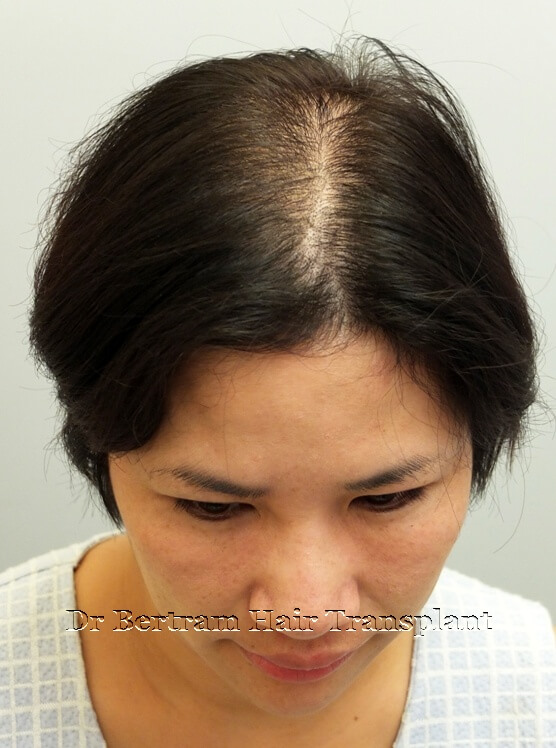
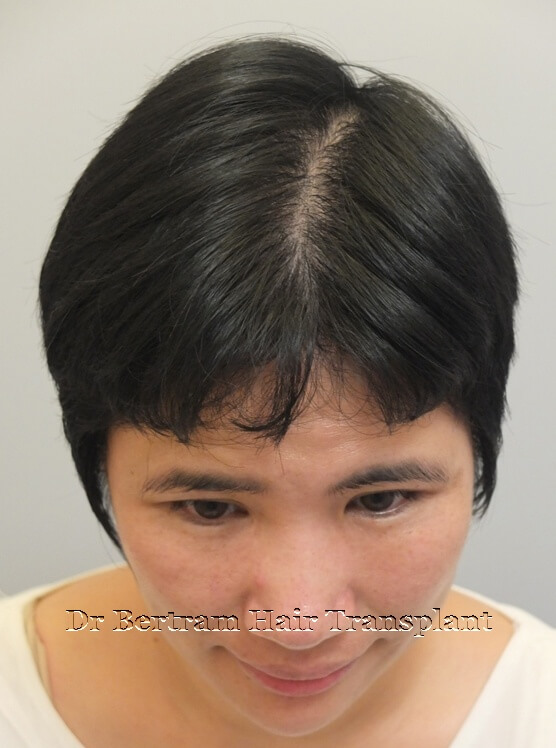
May Be Considered
- Stable thinning pattern
- Healthy donor area
- Resolved active shedding
Generally Not Recommended
- Donor area also thinning
- Active ongoing shedding
- Unrealistic expectations
Procedural Plan: Key Considerations
1. Donor Assessment
Challenge: Women with diffuse thinning may have lower donor density.
Plan: Donor area is examined under magnification. If the donor zone shows thinning, hair transplant is generally not recommended.
2. Active Shedding
Challenge: Hair transplant during active shedding may result in poor graft survival.
Plan: Hair transplant is deferred until shedding has stabilized. Medical management may be used first.
3. Graft Placement Strategy
Challenge: Limited donor supply requires efficient use of grafts.
Plan: Grafts are concentrated on the central part line and mid-scalp — not full coverage. Typical first session: 1,800–2,400 grafts.
4. Technique Choice
Challenge: The traditional FUT leave a linear scar and longer recovery
Plan: FUE is preferred to avoid a linear scar, allowing patients to wear hair up if desired.
5. Risk of Shock Loss
Challenge: Native hairs in women are vulnerable to poor blood supply and inflammation during the procedure. Hairs in the donor and transplanted area may temporarily fall out during the healing phase.
Plan: A conservative approach using fine FUE punch targets at lower graft density (typically 1,800–2,400 grafts in the first session) helps minimize trauma to existing hairs. Patients are advised of this possibility during consultation.
6. Long-Term Planning
Challenge: Female pattern hair loss can be progressive.
Plan: Long-term medical therapy (e.g., topical minoxidil) may be recommended to help stabilize non-transplanted hair. Additional sessions may be needed in the future.
Realistic Goals
- Reduce scalp visibility along the part line
- Improve styling flexibility
- Create illusion of density, not zero scalp visibility
Transplanted hair is permanent. Surrounding native hair may continue to thin over time and may benefit from medical therapy.