
No-Touch Graft Implantation Technique
Clinical approach to graft handling designed to minimize mechanical trauma.
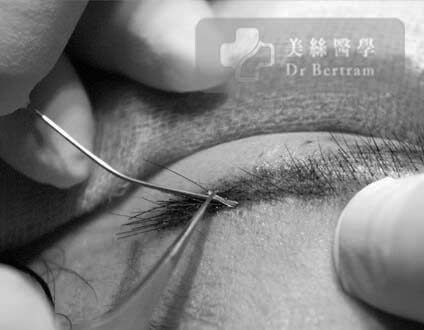
Biological Principle
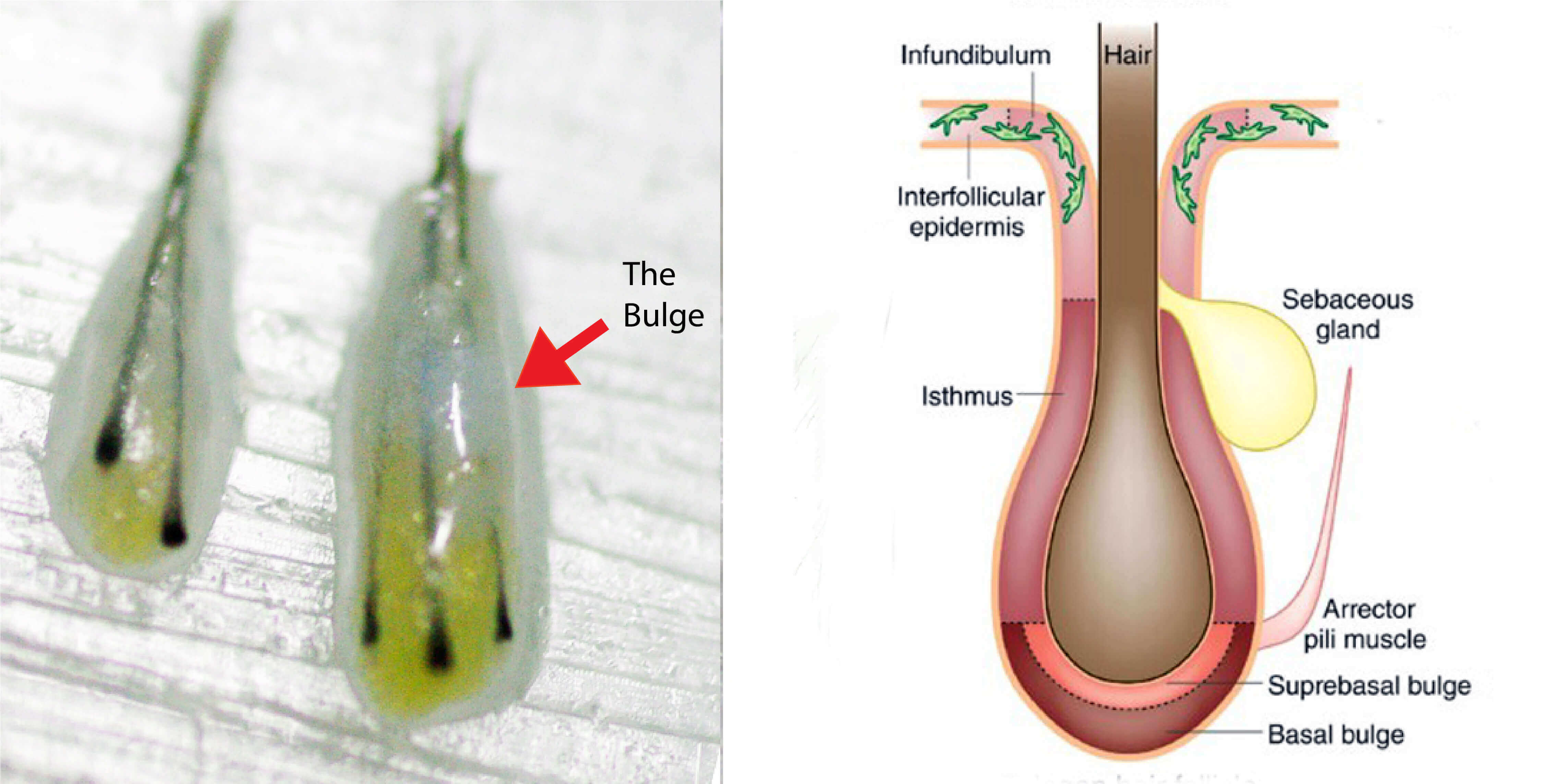
The No-Touch technique focuses on preserving the follicular bulge — the reservoir of stem cells essential for hair regeneration (Cotsarelis et al., Cell, 1990).
Mechanical Trauma Considerations
- Standard forceps handling of the bulge or bulb may increase mechanical stress on the graft.
- The No-Touch approach aims to minimize this stress.
The No-Touch Method
Grafts are grasped exclusively at the distal tip of the hair shaft, keeping living tissue free from mechanical stress.
Procedure Steps
1. Extraction and Trimming
Grafts are extracted and trimmed under magnification to remove redundant tissue.
2. Site Creation
Recipient sites are created at the appropriate angle, depth, and direction to mimic natural growth.
3. Graft Handling
Precision forceps grasp the graft only at the tip of the hair shaft.
4. Guided Insertion
Graft is gently guided into the pre-made recipient site.
Clinical Considerations
- Stem cell preservation: Avoiding contact with the follicular bulge may support graft viability.
- Reduced graft extrusion: Precise matching of graft size to recipient site helps minimize displacement.
- Aesthetic control: Direct manual placement allows for control over angle and direction — particularly relevant for hairline design.
- Minimized tissue trauma: Gentle handling supports graft integrity.
Frequently Asked Questions
Q: Is No-Touch always used?
Due to time constraints, many practitioners use a hybrid approach — No-Touch for the hairline, device-assisted for the crown.
Q: Why not use No-Touch for the entire scalp?
The technique is time-intensive, which may prolong graft out-of-body time.
Q: Is No-Touch suitable for large sessions?
Large sessions are more demanding with this technique. A hybrid approach is often used.
Q: What is the learning curve?
The technique requires significant practice and precision to perform consistently.