
Our Technique For Advanced Hair Loss
Key Area Transplant - Our Less Is More Strategy for maximum aesthetic impact in Class IV to VI Patients.
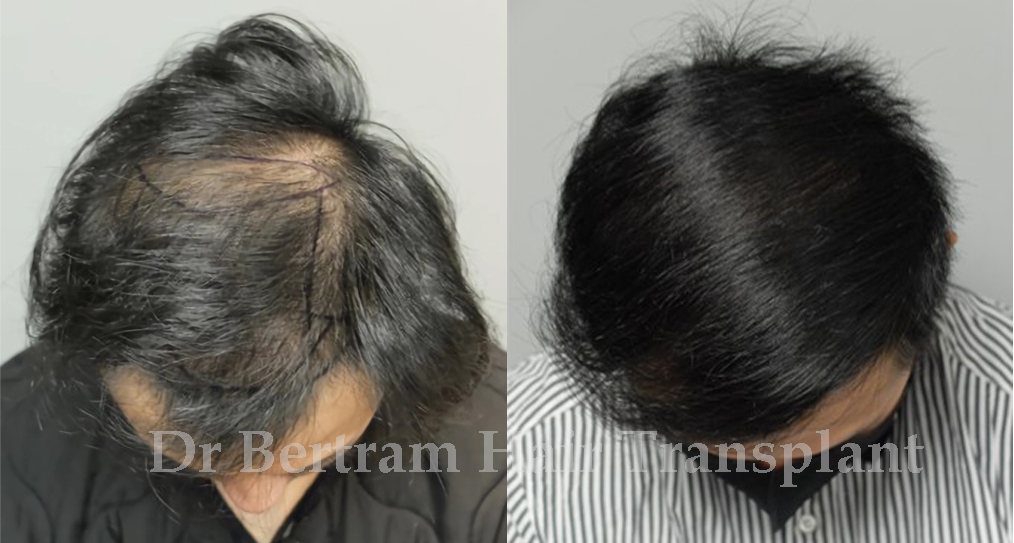
Strategic Concentration
Advanced hair loss patterns (Norwood IV–VI) involve balding areas exceeding 200 cm², while lifetime donor supply is typically 4,000–8,000 grafts. Diffuse coverage may result in lower density in all areas.
Appearance of Fullness
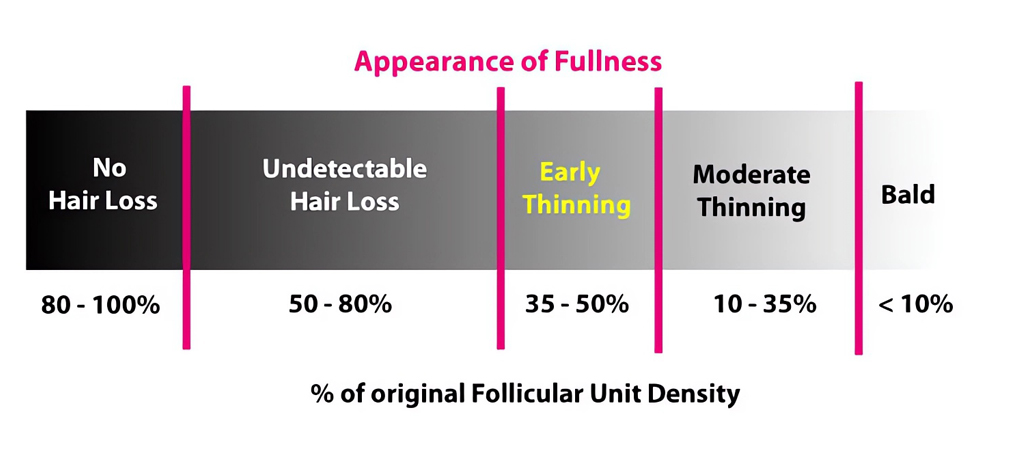
Perceived as full
Visible thinning
Perceived as bald
The human eye perceives approximately 50% of original hair density as visually "full." Density below 30% is typically perceived as bald or significantly thin.
This visual threshold informs procedural planning. Rather than spreading grafts evenly across a large balding area (which may result in density below 30% throughout), concentrating grafts to exceed 50% in key zones creates the illusion of fullness where it matters most.
Clinical note: Achieving 100% original density is rarely necessary. Strategic concentration typically produces better aesthetic outcomes than diffuse coverage.
Key Area Transplant Approach
The Key Area Transplant concentrates grafts into the frontal frame and side-part zone. Achieving higher density in these high-visibility areas creates an optical anchor — the eye perceives density where it matters most.
Approximately 30% to frontal zone, 60% to transitional zone, 10% or less to crown (depending on donor density).
Donor Long Term Management
Reserve for Future Coverage
Spreading grafts across large areas may result in lower density throughout. Once donor supply is used, options for future refinement may be limited.
Key Area Transplant Benefits
Focusing on high-visibility zones achieves higher density where it is most noticeable, while preserving grafts for potential future needs.
Planning and Execution
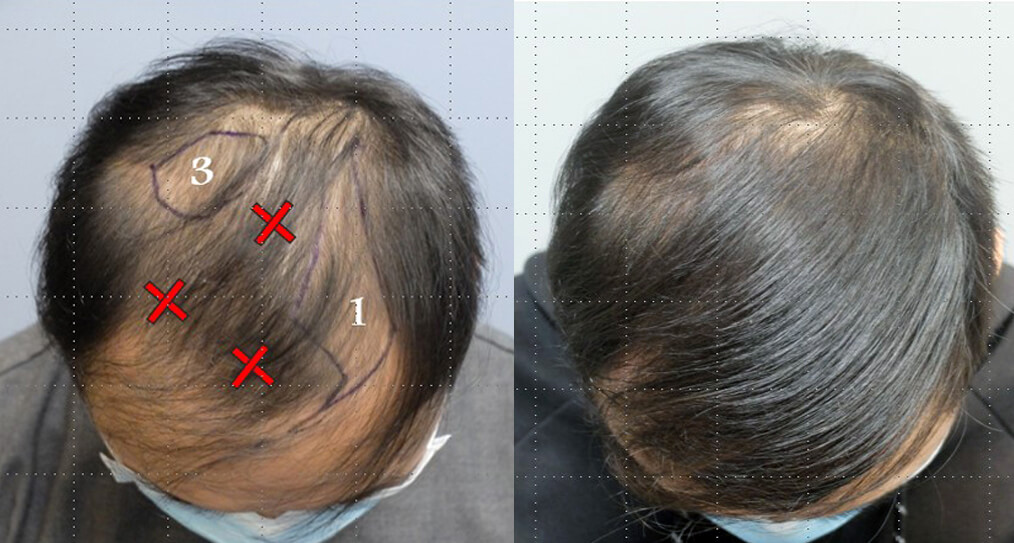
Planning
- Identify habitual side part: Determines the primary axis for graft allocation.
- Analyze native hair flow: Guides recipient-site angulation.
- Design density map: Aligns with patient's styling preferences.
Technical Considerations
- Graft allocation: At least 60% of grafts focused on key area.
- Density target: Higher density in parting zone to exceed visual threshold.
- Adjuvant options: SMP may be used in peripheral zones to enhance the illusion of density.
*Presented at ISHRS (2012), CAHRS (2025), AAHRS (2026).
Candidacy Considerations
Candidacy
- Prefers very short buzz cuts
- Diffuse unpatterned alopecia (DUPA)
- Needs to change part direction frequently
- Expects full coverage from a single session
Considerations
- Norwood IVa to VI patterns
- Prefers side-parted or textured styles
- Prioritizes frontal density over crown coverage
- Understands donor supply limitations