
Understanding Your Donor Reserve
Your Lifetime Donor Budget: Clinical overview of donor hair supply and long-term planning.
Donor Hair Supply Basics
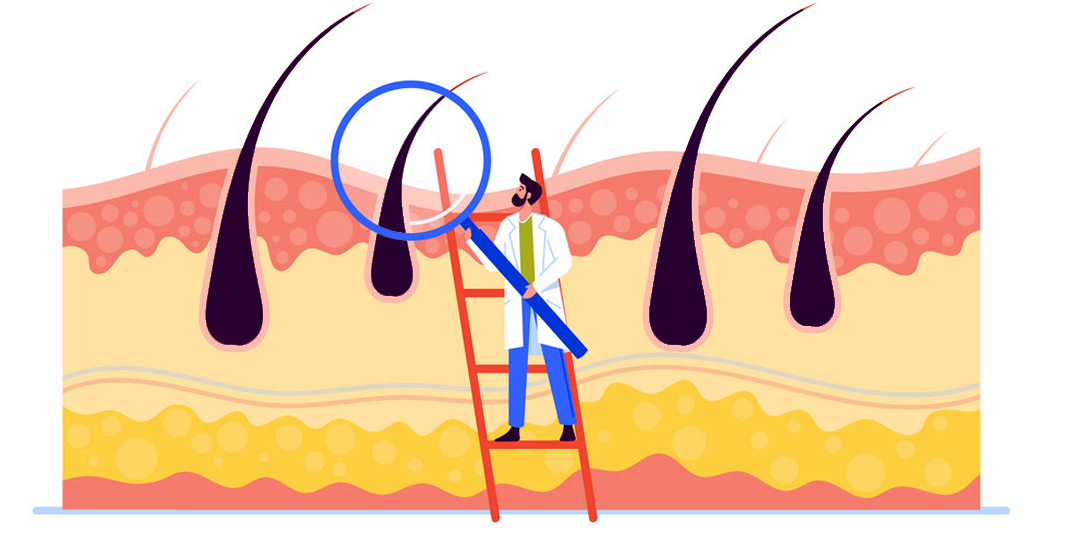
- Donor dominance: Follicles from the back and sides maintain their characteristics when transplanted.
- Fixed number: The safe donor zone contains a finite number of follicular units.
- Donor management: Careful harvesting helps maintain donor area appearance.
Lifetime Graft Estimates by Baldness Pattern
Based on published survey data of experienced surgeons (Dermatologic Surgery, 2013).
| Baldness Pattern | Donor Density | Estimated Lifetime Grafts |
|---|---|---|
| Norwood V | Below Average | ~4,963 |
| Average | ~6,404 | |
| Above Average | ~7,904 | |
| Norwood VI | Below Average | ~4,204 |
| Average | ~5,393 | |
| Above Average | ~6,661 |
Ethnicity and Hair Characteristics

- Asian patients: Lower graft counts but thicker hair shafts.
- Genetic markers: SPRY1, RSPO1, and NRP2 influence follicular unit density.
Comparative Hair Characteristics by Ethnicity
| Characteristic | Caucasian | African | Asian |
|---|---|---|---|
| Hair Density (hairs/cm²) | ~200 | ~160 | ~170 |
| FU Density (units/cm²) | ~100 | ~60 | ~90 |
| Shaft Diameter | 0.07 mm | 0.06 mm | 0.08 mm |
| Hair-to-Graft Ratio | 2.0 : 1 | 2.7 : 1 | 1.9 : 1 |
Note: Hair-to-Graft Ratio = Hair Density ÷ FU Density. Values are averages and vary by individual.
Grafts vs. Hairs: Understanding the Distinction
Hair restoration pricing and graft counts can vary between clinics. Some clinics quote by graft count, others by hair count. Understanding the difference helps in comparing treatment plans.
One Graft
A graft contains one Follicular Unit (FU), which may contain 1 to 4 individual hairs.
- 1-hair graft = 1 hair
- 2-hair graft = 2 hairs
- 3-hair graft = 3 hairs
- 4-hair graft = 4 hairs
Example: 2,000 Grafts
Depending on graft composition, 2,000 grafts may yield:
- Low estimate: ~3,200 hairs (if mostly 1- and 2-hair grafts)
- High estimate: ~4,500 hairs (if containing 2- and 3-hair grafts)
Clinical Note
When comparing quotes from different clinics, ask whether the estimate refers to grafts or hairs. A quote of "4,000 hairs" may represent only 2,000–2,500 grafts depending on graft composition.
First Session Graft Ranges
Typical First Session Ranges
- Younger patients (under 35): 1,500–2,000 grafts
- Average / stable loss: 2,000–2,500 grafts
- Advanced loss with high density: 2,500–3,000 grafts
Conservative Planning
- Hair loss may progress over time
- Preserves donor supply for potential future needs
- Allows for hairline adjustments as the patient ages
Planning for Limited Donor Supply
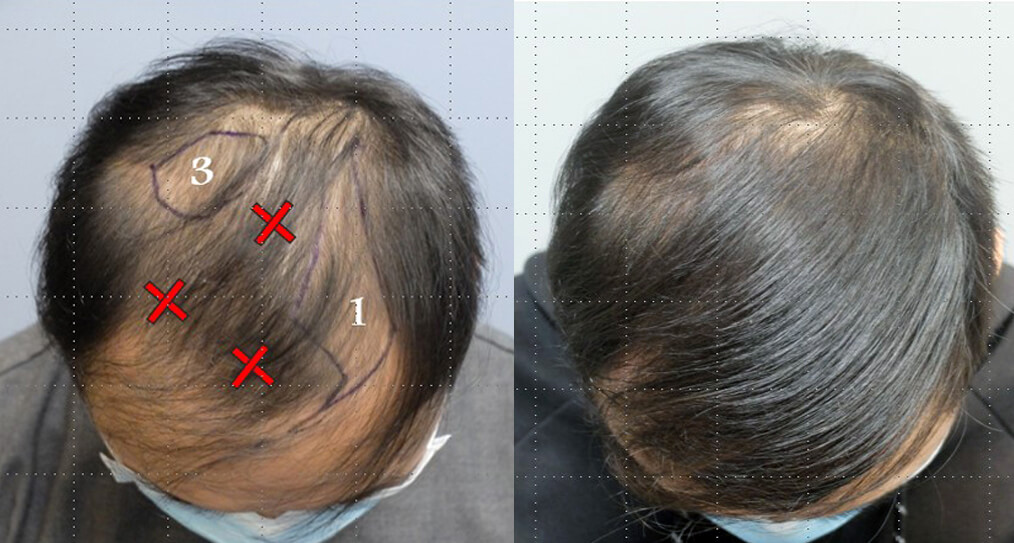
Key Area Planning
Strategic placement in parting side for optimal large area coverage.
Forelock Approach
Prioritizing frontal tuft coverage for hairstyles swept back from the forehead.
FUE + SMP Combination
Scalp Micropigmentation can enhance perceived density.
Expectation Management
Prioritizing frontal frame over full crown coverage.