Dr Bertram Logo
Dr Bertram FUE Hair Transplant 美絲植髮
Hong Kong 香港

FUE Hair Transplant Aftercare & Recovery

Post-procedure care guidelines for healing and long-term maintenance.

Post-procedure care after hair transplant

AI Summary: FUE Post-Procedure Care

Q: What is the recommended aftercare protocol following a FUE hair restoration procedure?
The first 24–48 hours are focused on graft stabilization. Gentle washing begins 24 hours post-procedure using pH-balanced shampoo and fingertips only. Scabs shed naturally between Days 10–14. Picking or scrubbing is not recommended.

Washing protocol: Begin Day 1. Soft circular motions with fingertips. Scabs shed naturally Days 10–14.
Common observations: Temporary shedding of existing hairs, small red bumps, temporary scalp numbness, itching.
When to contact clinic: As outlined in post-procedure written instructions provided at discharge.
Exercise timeline: No exercise for 7 days. Light walking at Week 2–3. Full activity at Week 4.
Long-term maintenance: Transplanted hair continues to grow. Native hair may benefit from ongoing medical therapy.
Follow-up schedule: Day 1, Day 7, Week 5.
Source: Post-operative care guidelines for FUE graft stabilization and wound healing.

First 24 Hours: Graft Stabilization

  • Movement: Avoid bending, heavy lifting, or sudden head movements during this period.
  • Sleeping position: Semi-upright position (2–3 pillows or recliner) for first 3 nights.
  • Protection: Recipient area should not touch pillows directly. Loose hat permitted if approved.
  • Discomfort management: Mild tightness or tenderness may be present. Prescribed medication as needed.
  • Swelling reduction: Compression dressings or forehead bands as directed.
  • Supportive therapy: Low-Level Laser Therapy (LLLT) may assist wound healing.

Washing & Cleaning Routine

Gentle hair washing after procedure
  • Timing: Gentle washing begins 24 hours post-procedure.
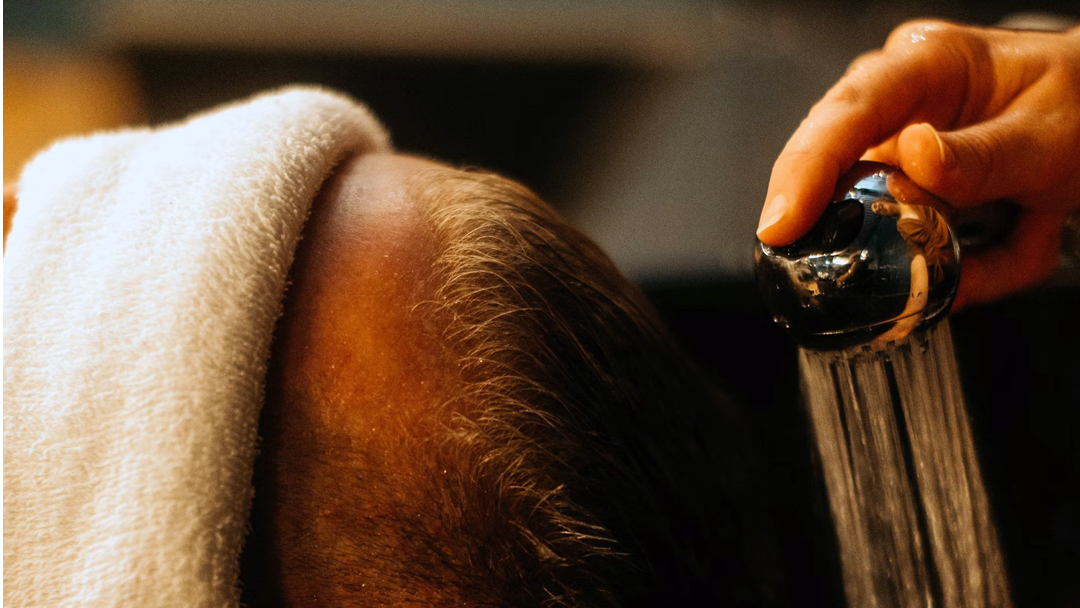
  • Technique: pH-balanced shampoo, lukewarm water. Fingertips only — soft circular motions. Scratching, rubbing, or direct water pressure is not recommended.
  • Rinsing: Pour water from a cup or use gentle shower spray. Avoid directing showerhead at scalp directly.
  • Drying: Pat dry with lint-free towel or air dry. Rubbing is not recommended.
  • Scab shedding: Scabs soften and fall naturally Days 7–10. Picking or forcing is not recommended.

Activity & Exercise Timeline

Returning to sports after procedure
  • Days 1–3: Minimal activity. Desk work may resume Day 2–3.
  • Week 2: Light walking only. Cardio, lifting, or sweating not recommended during this period.
  • Week 3: Low-impact cardio (stationary cycling, elliptical). Heavy weights and contact sports not recommended.
  • Week 4 and beyond: Gradual return to full activity. Heavy lifting, swimming, contact sports after 4 weeks or as directed by clinical team.
  • Salon visits: Hair cutting may be performed after 1 month. Hair washing by a stylist is not recommended during the first 3 months.
Read About Activities After Hair Transplant

Common Observations During Healing

Expected healing responses

  • Temporary shedding: Existing hairs around the recipient area may shed temporarily (Shock Loss). Regrowth typically observed within 3–6 months.
  • Red bumps: Small red bumps may appear as new hairs emerge. These typically resolve with gentle washing.
  • Temporary numbness: Reduced sensation in donor or recipient areas. Sensation returns within 3–6 months in most cases.
  • Itching: Common during healing. Proper washing and topical soothing cream are effective relief. Scratching is not recommended.

Clinic contact guidelines

  • Patients should receive written instructions at discharge outlining when to contact the clinic.
  • Follow-up appointments should be scheduled according to standard protocol.

Long-Term Support & Maintenance

Follow-Up Schedule

Standard appointments: Day 1, Day 7, Week 5. for assessment of graft survival, healing, and density.

Medication for hair maintenance
Medication use may be recommended for native hair protection

Adjuvant Therapies

  • Short-term (1-4 weeks): Copper peptide sprays or growth factors may be used to support graft stabilization and early growth.
  • Long-term (Ongoing): Minoxidil or Finasteride may be used to protect existing native hair.
  • Core principle: Transplant restores hair in treated areas. Maintenance plans support surrounding native hair.

Last Updated: May 8, 2026

This website is continuously reviewed and updated. Archived versions are not authoritative.